
Have you wondered why you often feel nervous, irritable, or anxious? Do you have a fast heartbeat and seem to lose weight without trying? Sometimes, these symptoms are the result of stress or diet. However, symptoms such as these may point to something more serious: hyperthyroidism.
About 1 in 100 people in America suffer from hyperthyroidism. This means that close to 3.5 million people in America have the condition. However, some may not even realize they suffer from hyperthyroidism.
We at Prescription Hope want to provide anybody with hyperthyroidism or Grave’s disease with support to help them live a full and healthy life. Knowing more about hyperthyroidism and available treatments could provide exactly what a patient needs to get their life back.
What is Hyperthyroidism?
The thyroid gland produces thyroid hormone in the body. Thyroid hormone regulates the energy systems of the body. When the pituitary gland receives signals from the hypothalamus that more thyroid hormone needs to be released, it signals the thyroid by producing thyroid-stimulating hormone (TSH). This hormone signals the thyroid gland to produce more thyroid hormone (T3 and T4). When the thyroid releases T3 and T4, the liver takes up T4 and turns it into T3. T3 is the active form of thyroid hormone and interacts with many different parts of the body. Some of those areas of the body include digestion, heart function, body temperature, metabolism, and muscle function.
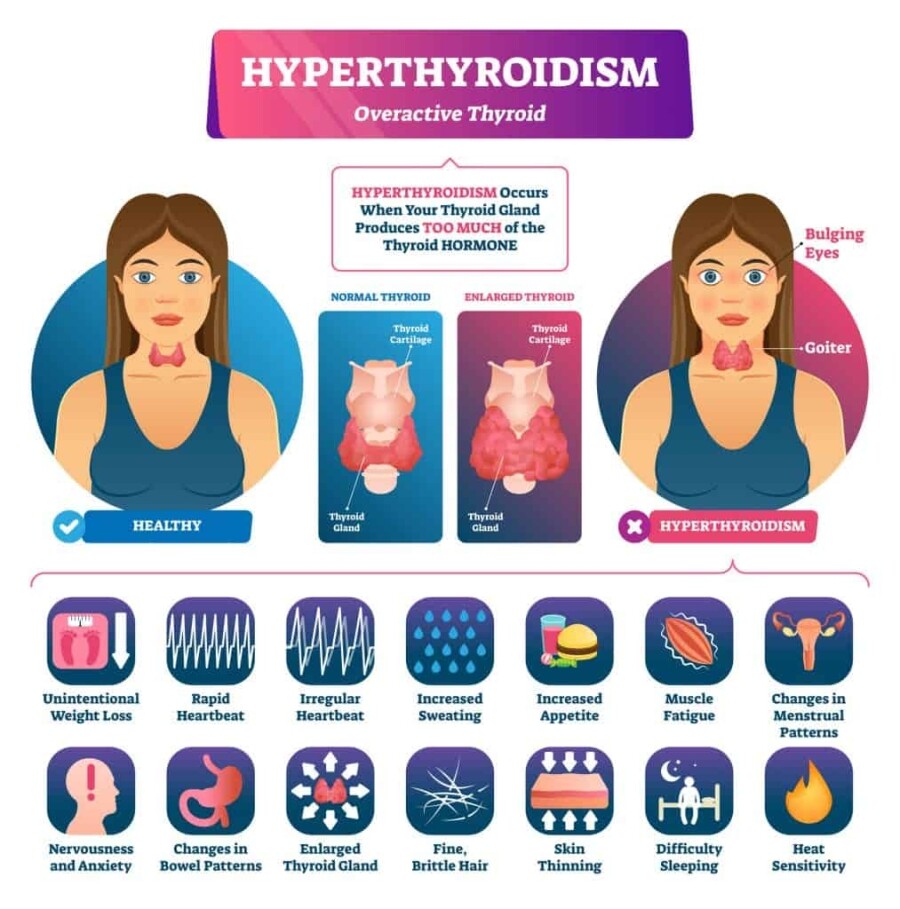
If the thyroid gland overproduces thyroid hormone, then a person suffers from a condition called hyperthyroidism. An overactive thyroid will produce symptoms such as:
- Increased appetite
- Weight loss
- Shakiness
- Nervousness
- Vision changes
- Sleep problems
- Rapid heart rate
- Hair loss
- Bulging of the eyes (Graves’ disease)
- Muscle weakness
- Heat sensitivity
- Reduced libido
- Fatigue
- High blood pressure
Symptoms may start suddenly in a patient, or they may come on over the years. Recognizing the symptoms and seeing a doctor becomes important to treating hyperthyroidism before complications arise.
What Causes Hyperthyroidism?
Several different causes of hyperthyroidism exist. Statistics show that Graves’ disease stands as the most common cause of hyperthyroidism.
Graves’ Disease
While Graves’ disease can affect anybody, women and people under 40 are more likely to be affected.
Graves’ disease results from your immune system attacking your thyroid. With Graves’ disease, the immune system attacks the thyroid and forces the creation of too much thyroid hormone. Unfortunately, the condition gets passed down through family members by genetics.
Additionally, around 3 in 10 people with Graves’ disease may show some symptoms of Graves’ ophthalmopathy. Also known as GED or thyroid eye disease (TED), this condition causes inflammation and other issues in the muscles and tissues around the eyes. Symptoms of Graves’ ophthalmopathy include:
- Bulging eyes
- Light sensitivity
- Vision loss
- Puffy eyelids
- Eye pain
- Inflammation in the eyes
- Gritty feel to the eyes
However, the condition tends to be mild and may go away on its own. Some patients may deal with permanent changes, though other’s eyes may return to normal. In some cases, surgery may be needed to correct the changes.
Thyroiditis
Thyroiditis results from inflammation of the thyroid gland. When inflammation occurs in the thyroid gland, it may result in an overactive thyroid gland. This might cause pain or may also be painless. Reducing inflammation may not result in recovery of thyroid production, leading to hypothyroidism.
Too Much Iodine
People at risk for hyperthyroidism who consume too much iodine may be at risk of overactive thyroid. Since the thyroid uses iodine to create thyroid hormone, the presence of too much iodine may result in an excess of thyroid hormone.
How is Hyperthyroidism Diagnosed?
A diagnosis of hyperthyroidism may start in a place you least expect. Going for a routine eye exam may provide you with directions to get more testing. If your eye doctor suspects GED, they may have you see your primary care physician.

Otherwise, if you notice the typical symptoms of hyperthyroidism listed above, then schedule an appointment with your doctor right away.
When you go to see your doctor, they will examine your thyroid gland for any enlargement or nodules present. Describe in detail your symptoms, especially if you suffer from accelerated heart rate, sweating, nervousness, etc. Oftentimes, your doctor will also examine your eyes to look for any eye redness, bulging, or swelling.
If your doctor suspects hyperthyroidism, they will schedule a blood test. Hyperthyroidism causes specific markers on your blood test which signals that the condition is present.
Accordingly, low TSH along with high T4 and/or T3 are strong indicators of hyperthyroidism. Along with those indicators, your blood test may show elevated levels of thyroid antibodies. Those antibodies might include Thyroid stimulating immunoglobulin (TSI), thyrotropin receptor antibodies (TRAB), or Thyroid Peroxidase antibodies (TPO).
They may also look at your cholesterol and blood glucose to determine whether you have hyperthyroidism or another condition.
If your doctor believes hyperthyroidism to be the cause of the irregularities in your blood work, they may include a thyroid ultrasound or nuclear medicine scans to determine the origination of the overactive thyroid.
Subclinical Hyperthyroidism
If TSH levels are low but T3 and T4 are normal, you may have subclinical hyperthyroidism. While some people feel symptoms with subclinical hyperthyroidism, many do not have any symptoms. At times, no treatments may be necessary. If that is the case, your doctor may want you to come in for regular check-ups and keep the condition under observation.
Treatments for Hyperthyroidism
When the thyroid gland overproduces thyroid hormone, several treatment options are available. If thyroid cells produce thyroid hormone on their own (without a signal from the pituitary gland) and are a growth on the thyroid gland then radioiodine therapy is often recommended as a treatment.
Radioiodine
Radioiodine treatment involves drinking or taking a capsule of radioactive iodine which is then absorbed by the troubled nodules or cancerous cells causing the issue. Destroying the overactive cells often will bring hormone production back into a normal range.
While the word “radiation” may make people concerned, the truth is the amount of radiation is very low. Thankfully, most of the radiation leaves the body within a few days. Unfortunately, those who have Graves’ disease may be at risk when taking radioiodine. The treatment may increase the risk of eye issues related to Graves’ disease.
Surgery
Surgery may also be an option. If a particular nodule causes the thyroid to be overactive, then a doctor may recommend surgery to remove the trouble nodule. Doctors may elect to remove half of the thyroid gland where the nodule is located.
If several areas of nodules and/or tissue are present across the thyroid gland, the doctor may choose to remove the entire thyroid gland. Similarly, if the thyroid gland has grown extremely large, then doctors usually recommend surgery to remove the gland.
Post-Surgery Medication
All things considered, post-surgery treatment will depend on the amount of thyroid gland removed in surgery. If doctors remove half of the thyroid gland (called a partial thyroidectomy) the thyroid may continue to work. However, a total removal of the thyroid gland (total thyroidectomy) will require a daily treatment of thyroid hormone for the rest of the patient’s life. The most common thyroid hormone drug prescribed is levothyroxine.
While the cause or source of the hyperthyroidism may be considered, other factors may be included in deciding what to take. Doctors may suggest taking one medication over another. Sometimes, a person may tolerate a medication more than another medication. Also, resistance to surgery may leave the patient with medication as an option.
What if I Don’t Get My Hyperthyroidism Treated?
Ignoring hyperthyroidism or avoiding treatment may result in dangerous complications. Some of the complications include:
- Irregular heartbeat
- Blood clots
- Stroke
- Heart failure
- Difficulty conceiving
- Osteoporosis
Such complications could result in major health problems or even risk of death. Unfortunately, the condition is unlikely to go away, making treatment and medication all the more necessary for those who suffer from Graves’ disease or hyperthyroidism.
Medications for Hyperthyroidism
Beta-Blockers
Sometimes doctors prescribe beta-blockers to help lower certain symptoms. Nervousness, anxiety, rapid heartbeat, and more can cause considerable stress for a person with hypertension. Drugs such as metoprolol or propranolol are popular beta-blockers. Inderal, Hemangeol, or a generic Inderal are all popular beta-blockers.
While these drugs may help alleviate symptoms related to hyperthyroidism, they do not regulate the production of thyroid hormone. To treat the condition of hyperthyroidism, patients may be prescribed one of several different medications.
Anti-Thyroid Medication
The most common type of medication prescribed for hyperthyroidism is labeled anti-thyroid. Simply put, these drugs lower the amount of thyroid hormone being produced in the body. Drugs such as Thiamazole (also called methimazole) and carbimazole are most commonly prescribed. Doctors may prescribe these drugs first to help slow down hormone production and bring levels back to normal. From there, more tests may be done to determine the cause or source of the overactive thyroid gland.
Patients may find themselves having difficulty with those drugs. Propylthiouracil may be prescribed.
Propylthiouracil
The anti-thyroid medication, Propylthiouracil, treats Graves’ disease and hyperthyroidism by making it harder for the body to produce thyroid. Considered an anti-thyroid medication, the drug inhibits the body from using iodine to make more thyroid hormone. Doctors may also prescribe the medicine before thyroid gland surgery or radioiodine treatment.
Directions state to take the medicine orally and at regular intervals.
How to Get Propylthiouracil or Levothyroxine

Those who purchase Propylthiouracil or levothyroxine, whether through insurance, rebate programs, Medicare, or out-of-pocket often deal with high costs and strain on their budget. Considering the importance of this medication, nobody should have to choose between their prescription medications or their bills.
Instead, finding affordable options or low-cost drugs could be the difference between having what you need or not being able to provide support to a loved one.
While various programs exist to help those with needs for medications, such programs are often messy and complex. People seek out rebates and government programs but find themselves buried in paperwork and phone calls. Many prescription assistance programs come with complex variables. Unfortunately, confusion strikes people who try to find affordable hypothyroidism medication.
At Prescription Hope, we offer an affordable and simple process to get affordable meds every month.
How It Works
Those who wish to apply can visit PrescriptionHope.com. After becoming familiar with what Prescription Hope offers, you are welcome to complete and submit an online enrollment form. Once you submit the enrollment, Prescription Hope can pre-qualify you as soon as we determine we can assist based on the information provided.
After we receive all the requested paperwork from you and your healthcare provider, the first order of medication often arrives within 2 to 4 weeks. We will then place refills ahead of time so that you receive your medication on a regular schedule.
Medications typically arrive in a 90-day supply, directly to your home or healthcare provider’s office, depending on the requirements of the pharmaceutical company that ships your medication.
Prescription Hope’s Mission is to Help You Get Propylthiouracil
Prescription Hope dedicates itself to helping those with hyperthyroidism get the affordable meds they need at a reasonable monthly rate. We know Propylthiouracil provides vital, lifesaving regulation of thyroid hormone for a person with hypothyroidism, but we also know the expenses. Our desire for every member is to live without the stress and worry of paying too much for their prescriptions. We refuse to believe anybody should have to choose between Propylthiouracil or costs of living.
We provide a simple, consistent monthly rate of $70.00 per medication for over 1,500 medications. This means that not just people with hypothyroidism can benefit from what we offer. Our heart is to help you get access to affordable prescription medications.
If you or a loved one have been diagnosed with hyperthyroidism and are looking for cost savings on drugs or affordable thyroid medications such as Propylthiouracil or levothyroxine, then please visit us at www.PrescriptionHope.com to learn more about how we can save you money every month!
